Working Together to Grow Our Hedgerows
March 6, 2026
Our hedgerows may appear to be just a simple zig-zag of small saplings clad in their protective sleeves but their value to the farm is incredibly wide-ranging.
Hedgerows help us link our pockets of woodland across the farm, and are themselves little, linear woodland strips as they grow and develop, providing habitat to allow species to move around the farm. And in a similar way to woodlands, each hedgerow, especially once established, can provide summer shade and shelter from prevailing winds and weather for our livestock in an otherwise open and exposed field.
Whilst the hedgerow plants, and the larger ‘standard’ trees which grow above the tops of the hedgerows are themselves sources of food, with their flowers and berries, the sheltered bases of the hedgerows provide refuge for insects and small mammals, which in turn can be a bountiful larder for our birds of prey, and you may be lucky enough to see a barn owl or kestrel hunting along the hedgerows on the farm.
Generally, the most common species in our native hedgerows is hawthorn – and you will see a profusion of its white flowers in late spring. At Fordhall, we have carefully selected other species which will not only suit our variable soil conditions but also benefit our livestock. Many tree species have a wealth of nutritional or essential minerals contained within their leaves and bark. For example, willow is a good source of salicin (the main ingredient of aspirin) and being a particularly palatable species for cattle, it has beneficial antimicrobial, anti inflammatory and antifungal properties, and can contribute to improved animal health and aid self-medication.
Our hedgerow species can also benefit humans too, and many of the species we plant make good foraging. One specific species is the Shropshire Prune or damson. A once common species in this area which has sadly declined as hedgerows have been lost. We sourced and planted a good number of these in the hedgerow leading up to the Three Ponds.
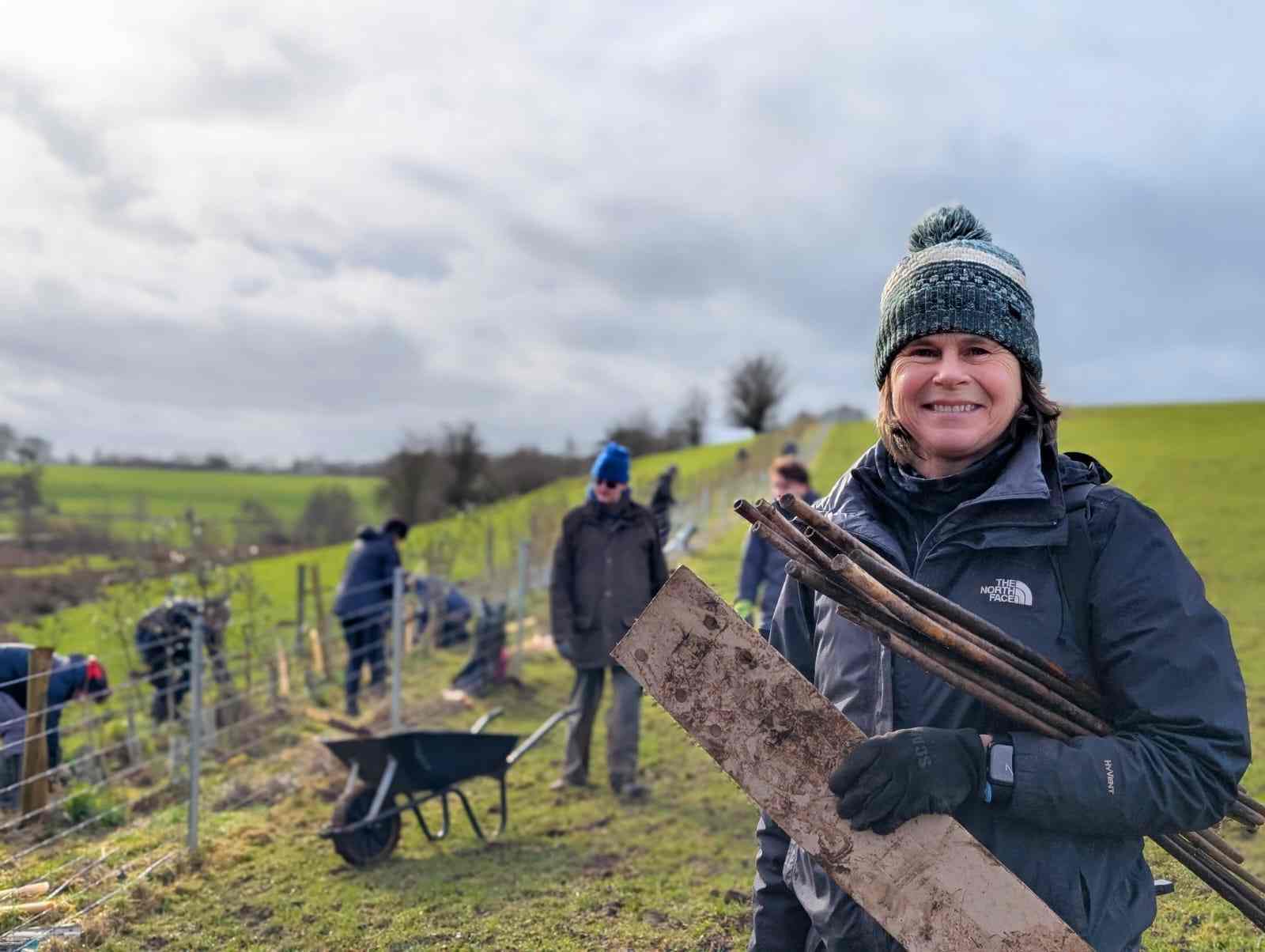
With six saplings per metre, as you can imagine, planting hundreds of metres of hedgerows takes a lot of people-effort. We have been very fortunate this winter to have the support of CPRE (Campaign to Protect Rural England) as part of their Hedgerow Heroes campaign, which aims to plant and restore hedgerows across England, enhancing biodiversity and combating climate change. Over two mornings in month, over 40 people planted in excess of 1,500 saplings along three hedgerows on the farm. But it doesn’t just stop with planting; whilst the saplings establish, they will need regular weeding, and in some of our more sandy soil, need to be watered during the summer.
If you’d like to be part of the future of our hedgerows, why not join one of our Friday volunteer sessions or look out for forthcoming Volunteer Weekends.
Ali Fowler, Volunteer and Conservation Lead